
Cash Grab NG: Building a Game I Couldn't Have Built Alone
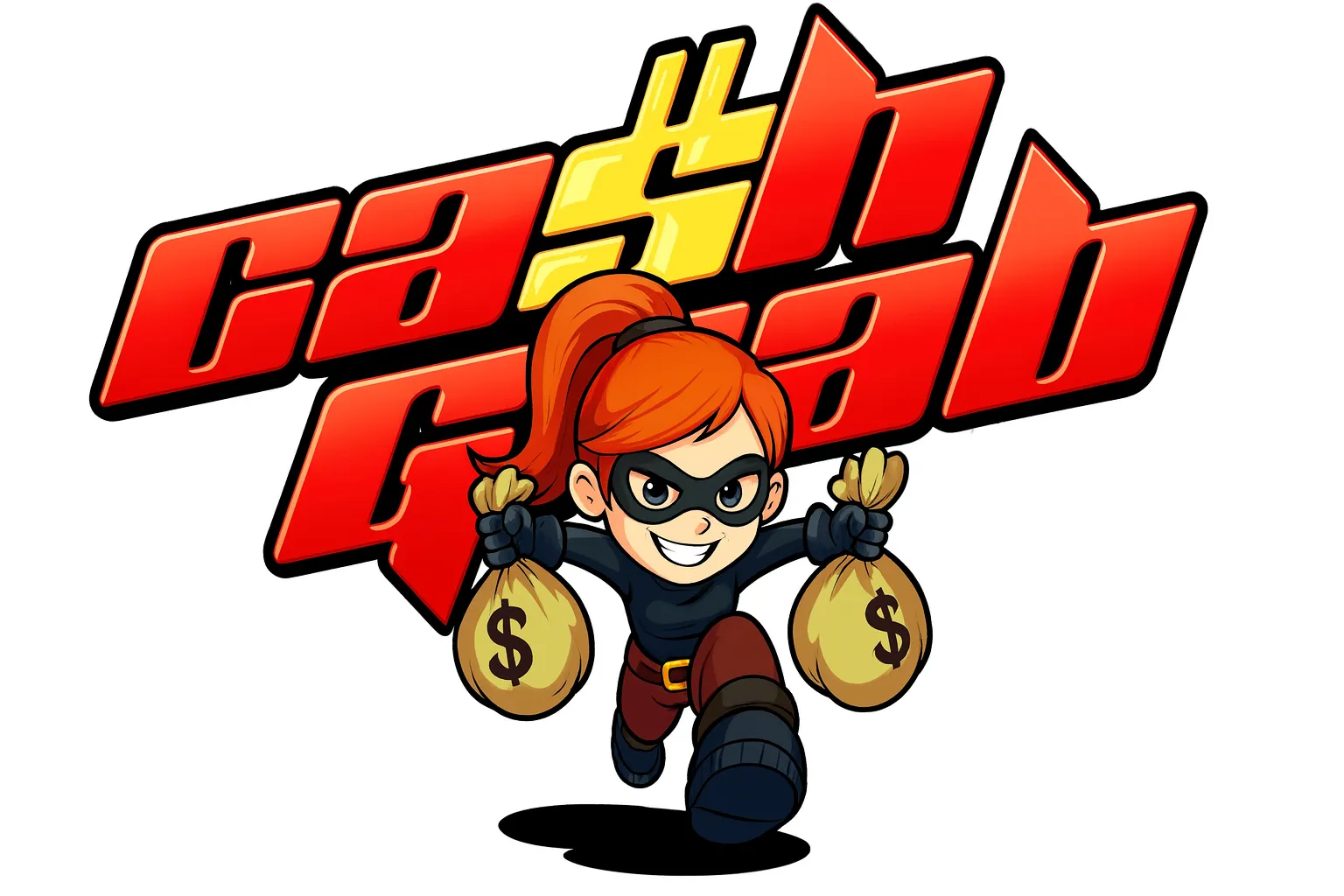
Cash Grab NG is a full rebuild of an iOS arcade game originally prototyped in Cocos2d years ago. Using Cursor and AI-assisted development, the game was rebuilt from scratch in Swift with SpriteKit, adding Game Center leaderboards, power-ups, and modern graphics. This post covers how AI accelerated the implementation, where it hit walls, and why 25 years of product experience still mattered more than the tools.
The backstory
Cash Grab isn't a new idea. The original concept goes back years. Craig Salter and I spent months building the first version using Cocos2d and C#, targeting the original iPhone. We had the gameplay nailed down: break into a vault, grab cash, dodge the cops. Simple, fast, addictive.
But that version never shipped properly. The graphics were all built for those early iPhone resolutions and looked terrible on anything modern. Worse, Cocos2d is largely a dead platform now. The game worked, but it was stuck in a codebase that had no future.
I always wanted to bring it back. When I started using Cursor for AI-assisted development, I realized I finally could. Not a port. A full rebuild in Swift with SpriteKit, keeping everything that made the original fun and adding the things we could never pull off the first time around.
What I built
Cash Grab NG is a fast-paced iOS arcade game. You sprint through a high-security vault, snatching bills and dodging laser grids and automated guards. There are global leaderboards through Game Center, power-ups, and the difficulty ramps as you progress. It's live on the App Store right now.
The whole thing was built in Swift with SpriteKit, and I leaned on Cursor for almost all of the game-specific code. Collision detection, particle effects, score multipliers, the guard AI pathfinding. Things I could reason about at a high level but couldn't have implemented from scratch.
Salvaging the old, building the new
One of the most satisfying parts of this project was bringing the original assets forward. The old graphics were all too low-res to use directly, but I didn't want to lose them. I used AI to either upscale the low-resolution images or get them redrawn in a similar style. The result looks modern but still feels like the same game Craig and I designed.
The sound effects all carried over too. The original audio was solid, it just needed small adjustments to work with the modern development environment. Having those familiar sounds in the new build made it feel like a real continuation, not a different game wearing the same name.
Where AI accelerated things
The biggest win was in the game loop and physics. I described the behavior I wanted ("the guards should patrol set routes but break off to chase the player when they get within a certain radius, then return to patrol if they lose line of sight") and Cursor generated working pathfinding code that I could test and iterate on. Would have taken me weeks to learn SpriteKit's contact detection system from scratch. Instead, I had a working prototype in a weekend.
Game Center support was entirely new. The original version had no online features at all. Cursor helped me wire up leaderboards and social components that I never could have included before. Being able to compete against other players and see global rankings added a whole layer to the game that the Cocos2d version simply couldn't support.
Power-ups were another area where AI shone. I'd describe what I wanted ("a shockwave that pushes all guards back with a radial explosion effect") and Cursor would generate the animations and particle systems using Swift's native capabilities. Several of the power-ups in the final game exist purely because I could describe them and get a working implementation back in minutes instead of days.
Where AI hit walls
Cursor was great at generating code that compiled and ran. It was less great at knowing whether the game was fun.
I'd get back a technically correct implementation of enemy movement, and the enemies would feel robotic and predictable. Or the collision detection would work perfectly but the hitboxes would feel unfair to the player. These are the kinds of things you only catch by playing the game over and over, watching someone else play it, noticing the moments where fun dies.
AI doesn't playtest. It doesn't feel the difference between a satisfying near-miss and a frustrating cheap death. That layer, the "is this actually fun?" layer, was entirely on me. And honestly, that's the part that mattered most.
The experience gap
I've been building products for 25 years. Not games, but digital products where you're always balancing what's technically possible against what actually works for real people. That judgment doesn't come from documentation or tutorials. It comes from shipping things and watching them succeed or fail.
With Cash Grab, my product instincts transferred directly. I knew when a feature was overengineered. I knew when the onboarding was too slow. I knew when a visual effect was cool but actually distracted from the core loop. AI gave me the implementation power. The editorial judgment was mine.
What's next
I'd like to try building another variant of the game, possibly a version with different levels and environments beyond the vault. The core mechanic is strong enough to support it, and now that the Swift codebase is solid, adding new content is much more realistic than it ever was with the old Cocos2d setup.
The mental model I landed on is this: AI is an incredible implementation partner for domains you understand conceptually but haven't built in before. You still need to know what good looks like, even if you can't write the code yourself. AI-assisted development doesn't replace your taste. It removes the bottleneck between your taste and the finished product.
That's the real unlock.
Frequently Asked Questions
What is Cash Grab NG?
Cash Grab NG is a fast-paced iOS arcade game where players sprint through a high-security vault, grabbing cash and dodging laser grids and robotic guards. It features global Game Center leaderboards, power-ups, and progressively harder levels. It's free to download on the App Store.
How was Cash Grab NG built?
Cash Grab NG was rebuilt from scratch in Swift with SpriteKit using Cursor, an AI-assisted development tool. The original version was built years earlier in Cocos2d and C# but was stuck on a dead platform. AI handled implementation of collision detection, particle effects, guard pathfinding, and Game Center integration.
What is AI-assisted game development?
AI-assisted game development uses AI coding tools like Cursor to generate working code from high-level descriptions. For Cash Grab NG, the developer described desired behaviors like guard patrol patterns and power-up effects, and the AI generated functional Swift and SpriteKit implementations that could be tested and iterated on.
Can AI replace game design experience?
No. AI can generate technically correct code, but it cannot playtest or judge whether a game is fun. The difference between a satisfying near-miss and a frustrating cheap death requires human judgment. AI removes the implementation bottleneck, but editorial and design decisions remain with the developer.
Is Cash Grab NG free?
Yes. Cash Grab NG is free to download on the Apple App Store for iPhone and iPad.
What was the original Cash Grab?
The original Cash Grab was a Cocos2d and C# prototype built by Colin Smillie and Craig Salter for early iPhones. The gameplay concept was solid but the graphics were locked to old resolutions and the platform had no future. Cash Grab NG is a full rebuild that preserves the core gameplay while modernizing everything else.

Colin Smillie
Most recently VP Technology at YMCA Canada. Building and shipping real products with AI-assisted development. More about Colin's advisory and executive work at colinsmillie.com.